What Are the 7 Love Languages? Meanings, Order, and How They Compare to the 5
If you searched "what are the 7 love languages," you may have noticed a small puzzle: the best-known love languages model has five, but many modern articles and quizzes discuss seven. The short answer is that there is no single official seven-love-languages list. Most seven-part versions begin with Gary Chapman's five classic love languages, then add two extra ways people often seek connection: emotional presence and shared growth. If you want a personal starting point after reading, you can explore a free love language test and use the results as a conversation guide, not a fixed label.

Are There 5 or 7 Love Languages?
The classic answer is five: Words of Affirmation, Quality Time, Receiving Gifts, Acts of Service, and Physical Touch. These are the "big 5 love languages" many people mean when they refer to the love languages book or the original love language framework.
The seven-love-languages idea is usually an expansion, not a replacement. Different writers use different names for the two added categories. Some versions talk about emotional connection, intellectual connection, activity, appreciation, practical support, or personal growth support. That variety is why search results can feel inconsistent.
For a clear and useful version, this guide uses seven practical categories:
- Words of Affirmation
- Quality Time
- Receiving Gifts
- Acts of Service
- Physical Touch
- Emotional Presence
- Shared Growth
This order is not a ranking. It simply starts with the five familiar love languages, then adds two broader needs that often show up in modern relationships. Think of the list as a vocabulary for noticing patterns. It can help you ask better questions, but it should not be used to judge a partner, excuse hurtful behavior, or reduce a whole relationship to one score.

What Are the 7 Love Languages and Their Meanings?
1. Words of Affirmation
Words of Affirmation means feeling loved through spoken or written appreciation. This may include encouragement, gratitude, gentle reassurance, or specific praise. The most meaningful words are usually personal: "I noticed how much effort you put into that" lands better than a vague compliment.
In a relationship, this love language matters because silence can be misread as indifference. A person who values affirming words may know they are loved, yet still feel distant if appreciation is rarely expressed out loud.
2. Quality Time
Quality Time is about focused attention. It is not only being in the same room; it is being mentally present. Phone-free dinners, walks, shared errands, and honest check-ins can all count when both people feel chosen and heard.
If this is someone's primary language, rushed multitasking may feel lonely. A small pocket of undivided attention can be more nourishing than a long day together with constant distraction.
3. Receiving Gifts
Receiving Gifts is often misunderstood as materialism. At its best, it is about visible thoughtfulness. The gift says, "I remembered you when you were not in front of me." A favorite snack, a handwritten note, or a small object connected to an inside joke can mean more than something expensive.
The emotional meaning comes from attention, timing, and fit. A gift that reflects the person's tastes can feel like proof that they are known.
4. Acts of Service
Acts of Service means love expressed through helpful action. This can include making dinner, handling a tiring chore, driving someone to an appointment, or solving a practical problem before it becomes heavier.
This language is powerful when the action reduces stress in a way the other person actually values. The key is not doing random tasks for credit; it is asking, noticing, and helping in ways that match the moment.
5. Physical Touch
Physical Touch includes affectionate, welcome contact such as holding hands, hugging, sitting close, or a reassuring touch on the shoulder. In romantic relationships, it may also include intimacy, but it is not limited to sex.
Consent and comfort matter. For someone who values touch, a gentle, appropriate gesture can communicate safety and closeness quickly. For someone who does not, pressure can create distance. The healthiest version is mutual, respectful, and responsive.
6. Emotional Presence
Emotional Presence is one of the most common additions in seven-love-languages lists. It means feeling loved when another person can stay engaged with your inner world. This includes listening during stress, making room for vulnerability, and responding with empathy instead of rushing to fix everything.
This category is useful because many people do not only want time; they want emotionally available time. Someone may receive plenty of practical help but still feel unseen if their feelings are brushed aside.
7. Shared Growth
Shared Growth means feeling loved when a partner supports your development, goals, curiosity, and sense of purpose. It can look like celebrating progress, learning together, respecting ambitions, or encouraging healthier habits without taking control.
This language is not about pushing someone to become a different person. It is about saying, "I care about who you are becoming, and I want us to grow with kindness." In long-term relationships, shared growth can help love feel active rather than automatic.
What Are the 7 Love Languages in Order?
There is no official order for the 7 love languages because the seven-part model is not one single standardized system. If you see different lists online, that does not mean one person is necessarily wrong. It means the original five have been expanded in more than one way.
A helpful order for learning is:
- Start with the five classic categories.
- Notice whether emotional support feels separate from quality time.
- Notice whether growth support feels separate from acts of service or words.
- Compare your giving style with your receiving style.
- Ask which actions make love easier to feel during ordinary weeks.
This learning order keeps the framework practical. It also prevents the list from becoming a competition over which language is "best."
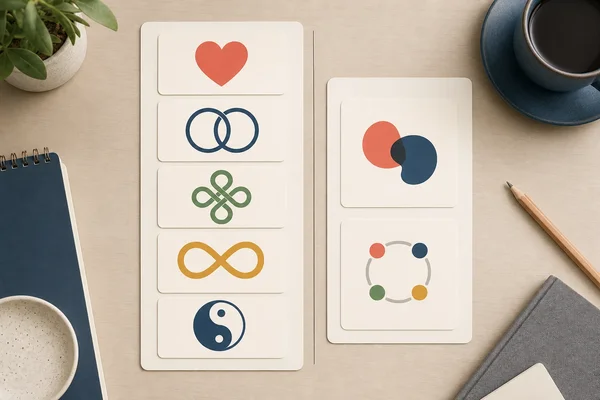
How the 7 Love Languages Work in a Relationship
In a relationship, love languages are most useful when they become a shared conversation rather than a demand. The goal is not to say, "This is my language, so you must do it my way." The goal is to understand which actions help each person feel cared for.
Try this simple reflection:
- Write down three recent moments when you felt loved.
- Match each moment to one of the seven categories.
- Write down three recent moments when your effort seemed to miss the mark.
- Ask whether you were giving love in your preferred style instead of the other person's.
- Choose one small action to try this week.
For example, one partner might clean the house to show care, while the other keeps wishing for a slow conversation. Both needs can be valid. The repair begins when each person can say, "I see what you were trying to offer, and here is what helps me feel close."
If you prefer a guided starting point, a love language quiz can help you name your likely patterns before you discuss them with someone else. Keep the tone light. Results are best used as prompts for reflection, not as permanent identities.
Use the 7 Love Languages as a Conversation Starter
The best use of the 7 love languages is not memorizing a perfect list. It is becoming more curious about how love is sent, received, and sometimes missed. Ask your partner, friend, or family member: "When do you feel most appreciated by me?" Then listen for the pattern underneath the answer.
You can also ask yourself which category you tend to offer first when someone matters to you. Many people naturally give the kind of affection they hope to receive. That habit is understandable, but relationships often deepen when we learn to translate care into the other person's language.

For a gentle next step, use a self-reflection love language tool to compare your likely preferences, then choose one small experiment: a more specific compliment, a distraction-free conversation, a thoughtful token, a helpful task, a welcome hug, a deeper check-in, or support for a goal. If your relationship includes repeated distress, coercion, safety concerns, or conflicts that feel too heavy to handle alone, consider speaking with a qualified relationship professional.
FAQ
What are the languages7?
People usually mean "What are the 7 love languages?" A practical seven-part list is Words of Affirmation, Quality Time, Receiving Gifts, Acts of Service, Physical Touch, Emotional Presence, and Shared Growth. The first five come from the classic framework; the final two are common modern additions.
What are the big 5 love languages?
The big 5 love languages are Words of Affirmation, Quality Time, Receiving Gifts, Acts of Service, and Physical Touch. They describe common ways people express and receive affection. Many seven-language lists build from these five rather than replacing them.
What do men crave the most in a relationship?
It is better not to reduce men, women, or any group to one emotional need. Many people crave respect, trust, affection, appreciation, reliability, and emotional safety. The specific mix depends on the person, their history, and the relationship dynamic.
What are the 10 languages of love?
There is no widely accepted official list of 10 love languages. When people mention 10, they are usually expanding the framework into more specific needs, such as humor, adventure, intellectual connection, spiritual connection, or emotional support. Those ideas can be useful, but they are not the classic model.
Is there a 7 love languages test?
Yes, some modern quizzes use seven categories, while others use the classic five. A test can be a helpful reflection tool if you treat the result as a starting point for conversation. It should not replace honest communication or professional support when a relationship problem is serious.
Can your love language change over time?
Yes, your strongest preferences can shift as life changes. Stress, parenting, distance, grief, work pressure, healing, and personal growth can all affect what feels most supportive. It is helpful to revisit the conversation instead of assuming one result will fit forever.