Love Languages for Friendships: Enhance Your Platonic Connections
Have you ever wondered why some friendships feel effortless while others seem to require constant work? You might put in the effort, but your friend doesn't seem to notice. Or maybe you feel underappreciated, even though you know your friends care. The secret to bridging this gap might be simpler than you think. The same love languages that transform romantic relationships can also revolutionize how you connect with your friends.
What if you could understand exactly what makes your friends feel valued and supported? This concept, originally developed by Dr. Gary Chapman, isn't just for couples. It’s a powerful tool for building deeper, more meaningful friendships. By learning how your friends prefer to give and receive love, you can turn superficial connections into bonds that last a lifetime.
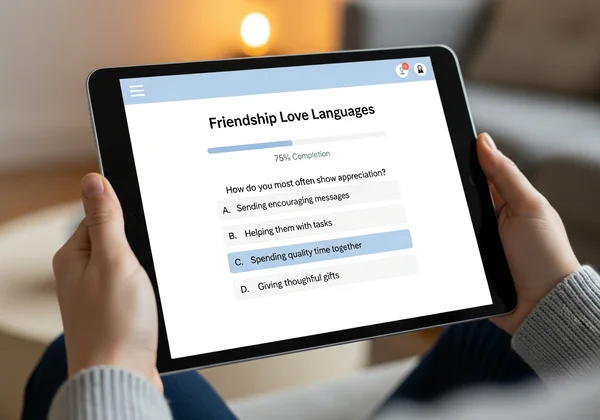
This guide will show you how to apply the five love languages to your platonic relationships. But first, to truly benefit, you need to understand your own primary love language. The best way to start is to take a quick and insightful love language test.
Understanding the 5 Love Languages in Friendships
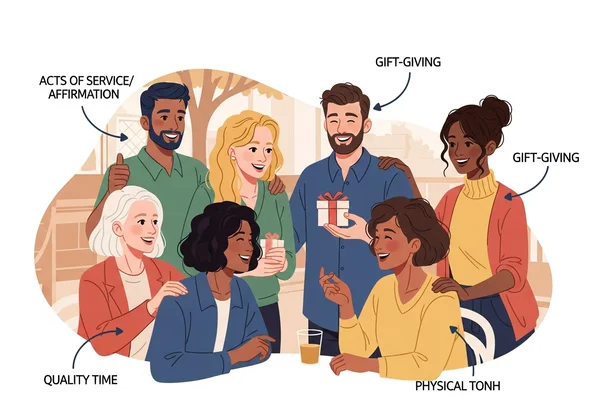
The core idea of the five love languages is that people express and feel love in different ways. What makes one person feel cherished might not register with another. Recognizing these differences is the first step to stronger friendships. Let's explore how each of the five love languages works in friendships. These include Words of Affirmation, Quality Time, Receiving Gifts, Acts of Service, and Physical Touch.
Words of Affirmation: How Friendship Compliments Build Confidence
For friends whose primary love language is Words of Affirmation, your words carry tremendous weight. They feel truly loved when you express your appreciation verbally. This isn't about flattery; it’s about genuine, heartfelt encouragement and recognition. A simple "I'm so proud of you" or "You handled that situation really well" can mean the world to them.
Critical words, however, can particularly hurt this type of friend, as they tend to recall negative comments long after they're spoken. When nurturing a friendship with someone who values affirmation, choose your words carefully. Celebrate their wins, offer sincere compliments, and send an unexpected text just to say you’re thinking of them. These verbal reassurances build their confidence and reinforce your bond.
Quality Time: The Foundation of Lasting Friendships
If your friend’s love language is Quality Time, what they crave most is your undivided attention. This isn't just about being in the same room; it's about being present together. Scrolling through your phone while they talk or being distracted by other things can make them feel unimportant. For them, shared experiences and focused conversations are the true currency of friendship.
To show love to this friend, schedule one-on-one hangouts without distractions. Go for a walk, grab coffee, or simply sit and talk. The activity itself is less important than the connection you build. Giving them your full, focused attention says, "You are important to me, and I value our time together." This is how you build a deep, lasting foundation for your friendship.
Acts of Service: Small Gestures, Big Impact in Friendships
For friends who speak the language of Acts of Service, actions truly speak louder than words. They feel loved when you do things for them that make their life easier. This could be helping them move, bringing them a meal when they're sick, or offering to babysit their kids so they can have a break. These gestures are tangible proof of your care and support.
These friends often show their love by doing things for others, too. Forgetting a promise to help them or creating more work for them can feel like a personal rejection. To connect with this friend, look for opportunities to lend a hand. Ask, "How can I help?" and then follow through. These small gestures have a big impact and show that you are a reliable and caring presence in their life. Ready to discover your own language? Start your test now.
Navigating Friendship Dynamics with Love Languages
Understanding the theory is one thing, but applying it to the messy reality of human relationships is another. Love languages can help you navigate common friendship challenges, from setting boundaries to resolving conflicts. It gives you a framework for understanding why misunderstandings happen and how to fix them.
Setting Healthy Boundaries Based on Love Language Preferences
Knowing your friend's love language—and your own—can help you set healthier boundaries. For example, if your love language is Quality Time but your friend's is Acts of Service, you might feel neglected if they are always busy. Instead of feeling hurt, you can communicate your needs directly: "I really value our one-on-one time. Could we schedule a coffee date next week?"
Similarly, if your friend values Physical Touch but you are less comfortable with it, you can explain this gently. You can say, "I'm not much of a hugger, but I love showing I care by sending you encouraging texts." This isn’t a rejection of them; it's an honest expression of your own comfort levels. Understanding these preferences allows for open communication, preventing hurt feelings and resentment.
Resolving Misunderstandings When Love Languages Clash
Many friendship conflicts arise from a simple clash of love languages. You might think you're showing love by offering helpful advice (Words of Affirmation), but your friend just wanted you to help them with a task (Acts of Service). This can lead to frustration on both sides. You feel unheard, and they feel unsupported.
When you recognize that you and your friend are just speaking different languages, you can approach conflicts with more empathy. Instead of assuming negative intentions, you can ask, "What would make you feel most supported right now?" This shifts the focus from blame to understanding. Learning to speak your friend's love language, even if it's not your own, is one of the most powerful ways to resolve misunderstandings and strengthen your bond.

Interpreting Mixed Signals in Friendships
Does your friend say they miss you but never make time to see you? Or do they constantly do favors for you but rarely offer a compliment? These "mixed signals" can be confusing, but love languages offer a clear explanation. Your friend is likely showing love in the way that is most natural to them, even if it’s not the way you best receive it.
The friend who does favors is likely an Acts of Service person trying to show they care. The friend who never initiates hangouts might not be a Quality Time person and shows their affection in other ways. When you can see their actions through the lens of their primary love language, their behavior starts to make sense. It stops being a mixed signal and becomes a clear message, just written in a different language. To decode your own patterns, a free love language quiz can provide valuable insights.
Transform Your Friendships with Love Language Awareness
Love languages aren't just for couples—they're a secret weapon for transforming your friendships too. When you understand how you and your friends give and receive love, you unlock a whole new level of connection that goes beyond surface-level interactions. You stop guessing what your friends need and start showing up for them in ways that matter most.
By recognizing that a friend who values Words of Affirmation needs your encouragement, while a friend who values Quality Time needs your presence, you transform your relationships. You learn to appreciate the different ways people show they care and become a better, more empathetic friend in the process. This awareness is the key to building friendships that can weather any storm.
Are you ready to take the first step toward stronger connections? The journey starts with self-discovery. Discover your own primary love language and learn how to recognize it in others. Take our free quiz at LoveLanguageTest.net today and start building the friendships you've always wanted!
Frequently Asked Questions About Love Languages in Friendships
Can love languages really apply to friendships, or just romantic relationships?
Absolutely. The five love languages are based on the universal human need to feel loved and appreciated. While some expressions might look different in a platonic context (for example, Physical Touch may involve hugs and high-fives instead of romantic intimacy), the core principles are the same. Understanding these languages can improve communication and connection in any relationship, including with family, colleagues, and especially friends.
How do I find out my friends' love languages without making it awkward?
You don't have to ask them directly. The best way is to observe and listen. Pay attention to how they show appreciation to others. Do they often give compliments (Words of Affirmation)? Do they always offer to help (Acts of Service)? Also, notice what they complain about. A friend who says, "We never hang out anymore," is likely a Quality Time person. You can also suggest taking the love language quiz together as a fun activity.
What if my friend and I have completely different love languages?
This is very common and not a problem at all! In fact, it's an opportunity for growth. The goal isn't to have matching love languages but to understand and adapt to each other's needs. If you know your friend values Acts of Service, you can make an effort to help them with something, even if your own language is Words of Affirmation. It shows you care enough to speak their language.
Is it possible for platonic friends to have "quality time" as a love language without it being romantic?
Yes, completely. Quality Time in a friendship is about giving someone your undivided attention to foster connection and trust. It can be as simple as a focused conversation over coffee, a shared hobby, or a long walk where you both put your phones away. It's about emotional intimacy and presence, not romantic intent.
Can understanding love languages help me make new friends more easily?
Yes, it can. When you understand the five love languages, you become a better "listener" in social situations. You can more quickly pick up on what makes new acquaintances feel comfortable and appreciated. By making small efforts to speak their potential language—offering a sincere compliment or suggesting a shared activity—you can build rapport and trust faster, turning new connections into genuine friendships. Discovering your own style is the first step, so why not try our free tool?