How Well You Know Your Partner Questions and Love Language Clues
Knowing your partner is not about memorizing every coffee order, childhood story, or favorite movie quote. It is about noticing what comforts them, what makes them feel seen, how they handle stress, and what kind of love feels real to them. A good "how well you know your partner" conversation can be funny, tender, surprising, and useful. If you want another gentle starting point, a free love language test can help you compare how each of you gives and receives affection before you play.

What It Means to Really Know Your Partner
The best partner-knowledge questions go beyond trivia. Trivia can be playful, and it absolutely belongs in a couple quiz, but deeper knowledge asks, "What matters to you, and how can I respond with care?"
Think of partner knowledge in five layers:
- Daily preferences: food, routines, rest, entertainment, chores, and little comforts.
- Personal history: childhood memories, family traditions, old dreams, turning points, and proud moments.
- Emotional signals: how they act when stressed, embarrassed, excited, lonely, or overwhelmed.
- Relationship needs: what helps them feel respected, desired, safe, heard, and appreciated.
- Future orientation: hopes, fears, money attitudes, family expectations, work goals, and lifestyle dreams.
A strong quiz moves between those layers. If every question is funny, you may learn what makes your partner laugh but miss what helps them feel loved. If every question is intense, the game can feel like an interview. The sweet spot is a mix: light questions, practical questions, and deeper questions when both people are ready.
20 Questions You Should Know About Your Partner
Use these as a starter round. Each person answers privately first, then compares with their partner. Keep score only if that feels fun; the value is the conversation after each answer.
| Question | What it helps reveal |
|---|---|
| What small habit instantly improves my day? | Daily comfort |
| What meal would I choose after a hard week? | Care and routine |
| What kind of compliment means the most to me? | Words of affirmation |
| When I am stressed, do I want space, help, touch, or listening? | Emotional support |
| What household task drains me the most? | Acts of service |
| What is one childhood tradition I still care about? | Personal history |
| What topic could I talk about for an hour? | Curiosity |
| What makes me feel ignored in a conversation? | Communication needs |
| What is my favorite way to spend an ordinary evening together? | Quality time |
| What gift would feel thoughtful even if it cost very little? | Receiving gifts |
| What physical affection do I enjoy in public or private? | Physical touch |
| What achievement am I quietly proud of? | Identity |
| What kind of humor do I love, and what kind bothers me? | Boundaries and play |
| What is one dream I rarely say out loud? | Future hopes |
| What is my biggest current source of pressure? | Stress context |
| Who has shaped the way I see relationships? | Family and mentors |
| What apology style helps me soften after conflict? | Repair |
| What does a good weekend look like to me? | Lifestyle |
| What do I need more of from us this season? | Relationship needs |
| What love language do I seem to notice first? | Affection pattern |
After the first round, choose three missed answers and ask follow-up questions. "Tell me more about that" is better than "How was I supposed to know?" If your answers point to affection patterns, comparing them with your love language profile can turn the quiz from a guessing game into a clearer conversation about what support looks like in real life.
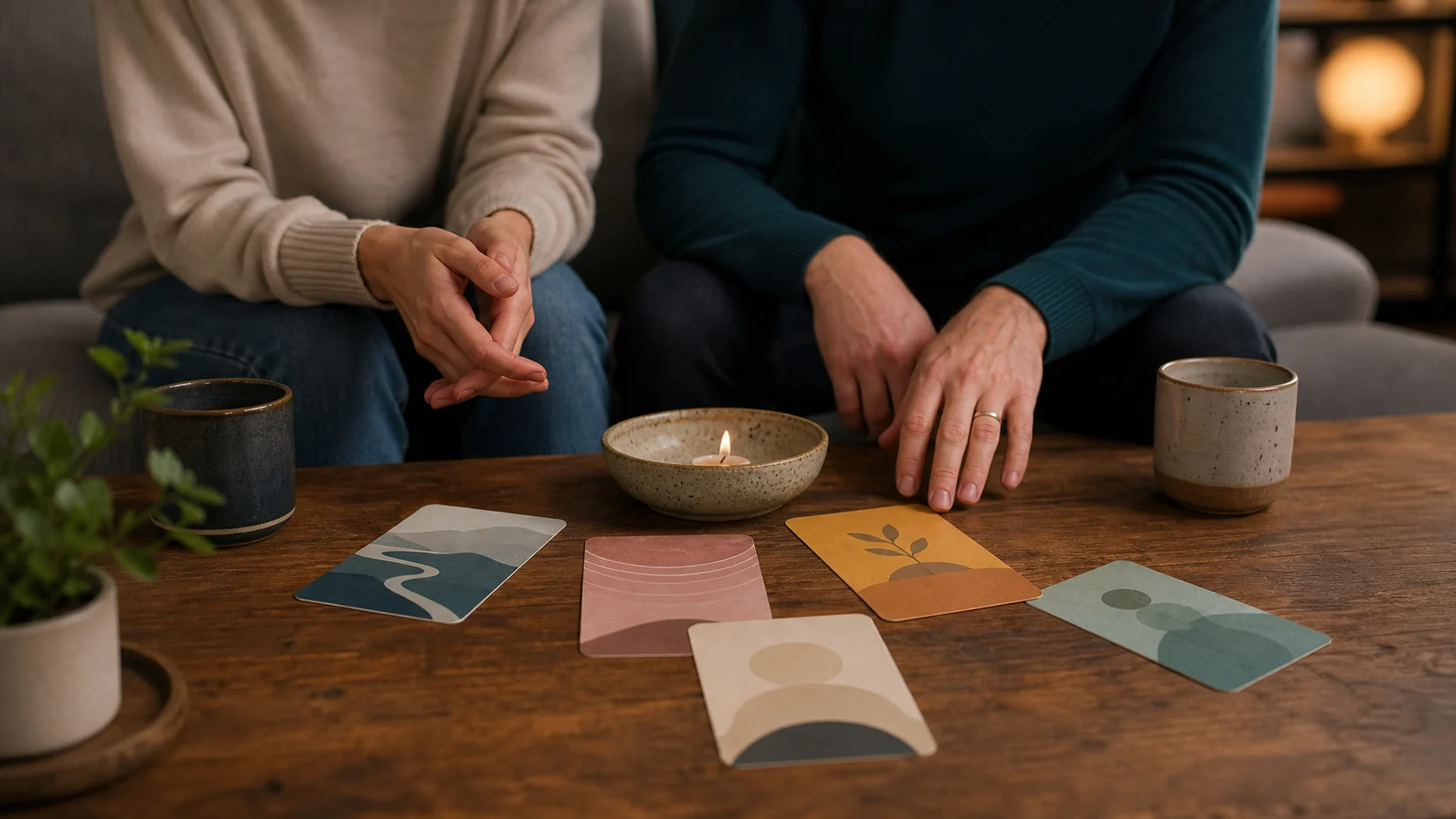
Funny and Deep Quiz Ideas for Different Couples
A funny quiz is useful because laughter lowers pressure. A deep quiz is useful because closeness needs more than shared jokes. Most couples benefit from both, especially if they agree on the tone before starting.
Funny Questions for a Light Round
Try these when you want a relaxed date-night game:
- What snack would I secretly want at midnight?
- What song do I pretend not to like but actually enjoy?
- What is my most predictable complaint?
- What object would I save first if I had five minutes to pack?
- What fictional job would I be terrible at?
- What is the most "me" thing I have ever done?
- What tiny inconvenience makes me dramatic for no good reason?
- What would I order at a restaurant and then regret not ordering from your plate?
Funny questions work best when the humor is affectionate. Avoid questions designed to embarrass your partner in a way they would not enjoy.
Deep Questions for Real Understanding
Use these when both of you have time and emotional bandwidth:
- What fear do I usually minimize because I do not want to seem needy?
- What does loyalty mean to me in everyday behavior?
- When do I feel most respected by you?
- What part of my past still shapes how I react during conflict?
- What kind of support helps me feel capable rather than managed?
- What dream would I like you to take more seriously?
- What do I find hard to ask for directly?
- What would make our relationship feel more peaceful this month?
Deep questions do not need perfect answers. They need patience. If a question touches something painful, slow down and treat the answer as information, not a debate prompt.
Boyfriend, Girlfriend, Husband, and Wife Quiz Angles
Searches like "how well do you know your boyfriend quiz" and "husband wife quiz questions game" often point to the same underlying need: people want a format that fits their relationship stage. Newer couples may focus on preferences, stories, boundaries, and early expectations. Married or long-term couples may need questions that break routine, such as "What have I stopped telling you because life got busy?" or "What kind of attention do I miss from our earlier years?"
The best version is not tied to a label. It is tied to safety, consent, and timing. A playful boyfriend or girlfriend quiz can include future questions, but it should not force commitment conversations before both people are ready. A husband-and-wife quiz can include family, money, and responsibility, but it should still leave room for humor and tenderness.
How to Play a How Well Do You Know Your Partner Game
Choose a format before you begin. A simple structure keeps the game from becoming messy or competitive in a way neither person enjoys.
- Pick 20 to 30 questions. Mix daily, funny, deep, and love-language questions.
- Answer separately. Each person writes what they think the other person would say.
- Reveal one answer at a time. Let the partner decide whether the answer is close enough.
- Ask one follow-up after missed answers. The follow-up is the point.
- End with one action. Each person names one small thing they learned and one small way they can show care this week.
For a party, bachelorette game, or double-date setting, keep the questions lighter. Ask about first impressions, favorite snacks, travel dreams, pet peeves, and funny routines. Save vulnerable questions for private conversations where both people can respond honestly without performing for an audience.
If you want an online-free feel without building a full quiz maker, use a shared note, spreadsheet, or card deck. Number the questions, hide the answers, and reveal them one by one. The format matters less than the tone: curious, warm, and willing to be surprised.
Use Love Languages to Understand the Answers
The five love languages can make your partner quiz more useful because they add a "how love lands" layer to the facts you already know. Someone may know their partner loves clean counters, but the deeper clue is that an act of service helps that partner feel supported. Someone may remember a favorite gift, but the deeper clue is that tangible thoughtfulness feels meaningful.
Here is how to read answers through that lens:
- Words of affirmation: notice compliments, encouragement, apology language, and verbal reassurance.
- Quality time: notice attention, presence, rituals, date ideas, and distraction-free moments.
- Receiving gifts: notice symbols, keepsakes, celebration style, and evidence that someone remembered.
- Acts of service: notice help, reliability, shared load, and practical care.
- Physical touch: notice comfort touch, playful affection, closeness, and preferred boundaries.
This does not mean every answer belongs to one category forever. People are flexible, and needs can shift with stress, life stage, and context. Treat love languages as a conversation framework, not a fixed label. If your partner says they want more help this month, that may reflect real pressure even if acts of service is not usually their top language.
Keep Learning Your Partner Without Turning It Into a Scorecard
The healthiest answer to "how well you know your partner" is not a final score. It is an ongoing practice. You will forget things. Your partner will change. Some answers will depend on mood, season, work pressure, family demands, or personal growth. That is normal.
Use the quiz as a gentle reset:
- Ask one new question during a walk.
- Revisit one missed answer a week later.
- Notice which love language showed up most often.
- Thank your partner when they correct you kindly.
- Offer one specific act of care based on what you learned.
If the conversation reveals serious distress, recurring conflict, or concerns about safety, a quiz is not a substitute for qualified support. Educational tools can help you reflect, but complex relationship problems may need a professional setting.
For a low-pressure next step, you can explore your own love language pattern and invite your partner to do the same when it feels natural. Then compare results alongside your quiz answers: not to prove who knows more, but to understand what kind of attention helps each of you feel loved.
FAQ
What are 20 questions to ask your partner to see how well you know each other?
Ask a mix of daily, emotional, funny, and future-focused questions. Good examples include: What helps me calm down after stress? What compliment means the most to me? What task drains me? What dream do I rarely say out loud? What makes me feel ignored? What small habit improves my day?
How well do you know your partner list?
A useful list should include preferences, personal history, emotional signals, relationship needs, and future hopes. Start with easy prompts, then move into deeper questions only when both people feel ready. Include a few love-language clues so the answers connect to real-life care, not just trivia.
Can I make a funny how well do you know your partner quiz?
Yes. Funny questions are great for date nights, parties, and relaxed check-ins. Keep the humor affectionate, avoid private insecurities, and let either person skip a question. A funny quiz can still teach you a lot about taste, memories, habits, and the kind of play your partner enjoys.
What are deep questions to ask your partner?
Deep questions explore values, fears, support needs, family patterns, conflict repair, and hopes for the future. Try prompts like: What helps you feel safe with me? What do you wish I understood better about your stress? What dream do you want us to protect? Use a slower pace and do not push for answers your partner is not ready to share.
How well do I know my girlfriend or boyfriend?
You know them well if you can describe not only their preferences, but also why those preferences matter. For example, knowing their favorite date is nice; knowing whether that date feels like quality time, reassurance, adventure, or rest is more useful. Let missed answers become invitations to learn.
Is a partner quiz the same as a love language test?
No. A partner quiz checks what you know about each other. A love language test is a self-reflection tool for exploring how someone tends to give and receive affection. They work well together because quiz answers often reveal love-language patterns in everyday life.